
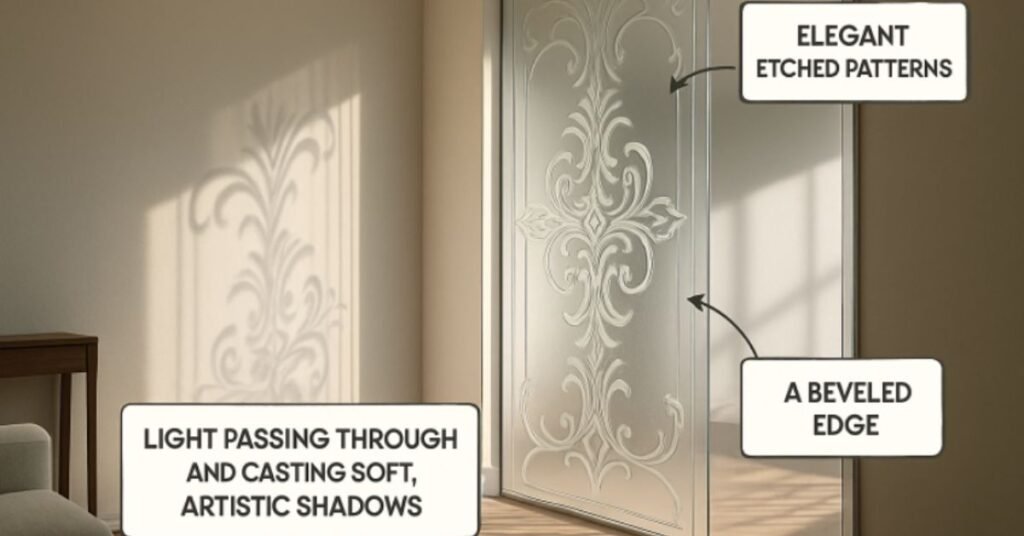
In today’s world of interior design, glass is no longer just a transparent boundary—it is a medium for art and innovation. Through the meticulous craft of glass etching and beveling, designers can redefine conventional spaces and infuse them with personality and functionality. Whether in homes or commercial buildings, these specialized techniques allow glass to stand out as a central design feature, elevating everyday environments to new levels of sophistication. For those exploring glass etching West Palm Beach, modern advancements have made these treatments more accessible, customizable, and breathtaking than ever before.
The ability to transform glass—by adding patterns, textures, or a prismatic play of light—translates into a design language that communicates both elegance and utility. Etched and beveled glass serves as both a privacy solution and a visual accent, achieving a rare harmony between form and function. From subtly frosted partitions to intricately etched glass doors, these techniques adapt seamlessly to a range of interior concepts and personal styles.
Designers now harness both traditional and cutting-edge glass treatments to realize their visions. With an array of methods such as sandblasting, acid etching, laser-precise cutting, and elaborate hand beveling, the creative potential is virtually limitless, enabling custom motifs, privacy solutions, and dramatic light effects that enhance the character of any space.
Embracing these innovations isn’t limited to luxury homes or high-end offices. With continually improving technology, even residential and smaller commercial projects can enjoy the unique ambiance and light play that etched and beveled glass delivers. As glass artistry evolves, so too do the opportunities for designers and homeowners alike to create beautiful, practical, and inviting interiors.
Glass Etching Techniques
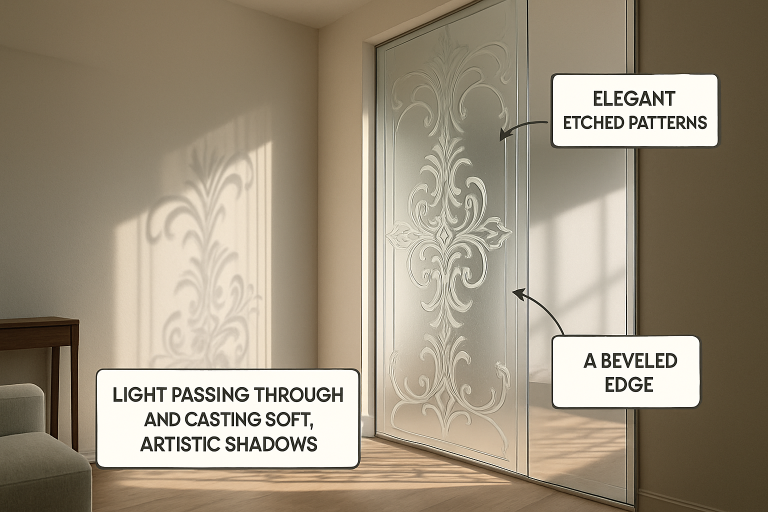
Glass etching is the process of creating a frosted or patterned surface on glass. By carefully abrading or chemically treating the glass, artists and manufacturers can introduce complex imagery and textures that diffuse light and obscure views without sacrificing illumination. Popular etching methods include:
- Sandblasting: This technique uses high-pressure streams of abrasive grit directed over pre-masked glass surfaces, producing soft, frosted finishes or dramatic, deeply cut relief designs.
- Acid Etching: Here, acid is applied selectively to the glass, dissolving a micro-layer from the surface to create an even, satin-like opacity—ideal for large-scale projects or repeating patterns.
- Laser Etching: Precise and digitally controlled, lasers engrave detailed designs or text with incredible fidelity, opening the door to personalized and highly intricate glass art.
Each method offers distinct advantages, from subtle matte effects to crisp, graphic visuals, making it easy to adapt etched glass to any interior or decorative preference.
Glass Beveling Methods
Beveling refers to grinding and polishing the edges of a glass panel at an angle, resulting in a striking multi-faceted border that refracts and splits incoming light. The result is a prismatic rim that brightens and highlights the glass, adding dimension and a touch of luxury to any installation. Beveling can be achieved through:
- Hand Beveling: Skilled artisans use grinding wheels and polishing compounds, allowing for variable widths and custom shapes—perfect for bespoke mirrors and decorative glass panels.
- Machine Beveling: More efficient and consistent, this method uses automated grinders to create repetitive patterns and geometric outlines in commercial or large-scale projects.
While machine beveling is prized for its precision, hand beveling remains vital for projects that demand character, tradition, and artistry, especially for unique architectural detailing.
Applications in Modern Interiors
The flexibility of etched and beveled glass allows it to fit beautifully into nearly any kind of interior environment. Common uses include:
- Partitions and Room Dividers: Offering a sense of separation without sacrificing natural light, these glass panels add privacy while maintaining an airy, inclusive feel.
- Doors and Windows: Both functional and decorative, etched and beveled glass brings a touch of artistry to entryways or can serve as accent glazing in interior windows for privacy and design. According to U.S. News, many homeowners find that impact-resistant windows, while more expensive upfront, offer long-term value by enhancing storm protection, improving energy efficiency, and potentially lowering insurance costs.
- Furniture Accents: From glass tabletops to back-shelving and cabinetry panels, etched or beveled glass adds drama and luminosity to functional pieces.
In addition to homes and offices, hospitality venues such as restaurants and boutique hotels often use decorative glass to define zones and create memorable, refined atmospheres.
Benefits of Etched and Beveled Glass
Integrating etched and beveled glass offers myriad advantages for interior environments:
- Enhanced Aesthetics: Instantly upgrades visual interest, adding timeless appeal and distinction to any space.
- Increased Privacy: Frosted and patterned finishes prevent direct views, making them ideal for bathrooms, offices, or entranceways.
- Light Diffusion: Maintains the brightness of open-plan spaces while reducing glare and softening harsh sunlight.
These qualities make treated glass an attractive, versatile solution for those looking to balance open interiors with a sense of intimacy and comfort.
Technological Advancements
Significant leaps in technology have revolutionized what’s possible with glass etching and beveling. Laser tools now enable artisans to execute fine details, custom graphics, or even photorealistic imagery directly onto glass surfaces. In parallel, advanced sanding and polishing machinery have enabled the efficient, accurate beveling of larger, more complex shapes. These innovations lower costs and expand access, empowering even small-scale projects to benefit from customized solutions and intricate artistic flourishes.
Maintenance and Care
To retain the clarity, beauty, and impact of etched or beveled glass installations, a simple maintenance routine is essential:
- Use a soft microfiber cloth and a gentle, pH-neutral detergent for regular cleaning.
- Avoid abrasive pads or rough cleaners that may scratch the textured or polished finishes.
- Check periodically for chips or cracks and consult a professional for repairs as needed.
With regular care and proper handling, glass features will continue to illuminate and enhance interiors for years to come.
Conclusion
Glass etching and beveling are powerful techniques that combine artistry and function, transforming interiors through beauty, light, and innovation. As more designers and homeowners embrace etched and beveled glass, the range of applications—as well as the practical and aesthetic benefits—continues to grow. By integrating these glass treatments, any space can achieve a distinctive character, enhanced privacy, and an inviting ambiance that stands the test of time.