
Global
News Desk | Environment
Global clima conditions continue to shift as average temperatures rise and extreme weather events become more frequent, according to international climate monitoring agencies. Scientists say the changes, observed across land and oceans over the past year, reflect long-term warming driven largely by human activity and are already affecting economies, public health, and ecosystems worldwide.
Data reviewed by the Intergovernmental Panel on Climate Change indicate that recent months rank among the warmest on record since systematic measurements began in the 19th century. Researchers attribute the trend primarily to greenhouse gas emissions from fossil fuels, land-use changes, and industrial processes.
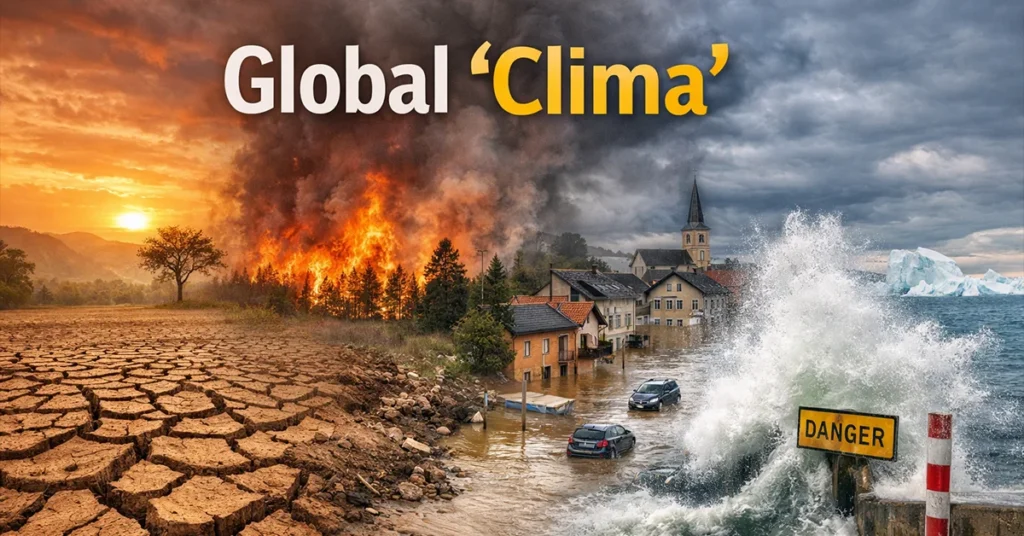
Rising clima temperatures have intensified heatwaves in several regions, including parts of Europe, South Asia, and North America. Health authorities reported increased cases of heat-related illness, while energy providers faced higher electricity demand as cooling use surged during prolonged hot periods.
Shifts in clima patterns have also been linked to heavier rainfall in some areas, contributing to floods that disrupted transportation networks and damaged homes and farmland. Emergency officials in affected regions said the combination of intense rainfall and aging infrastructure has increased vulnerability to sudden flooding.
Meanwhile, prolonged drought conditions associated with changing clima dynamics have strained water supplies in parts of Africa, the Middle East, and the western United States. Agricultural agencies warned that reduced rainfall and higher evaporation rates are affecting crop yields and livestock production.
Oceans, which absorb much of the excess heat trapped by greenhouse gases, continue to warm, contributing to rising sea levels, according to satellite and buoy observations. Coastal authorities said erosion and saltwater intrusion are becoming more common concerns for low-lying communities.
Governments have reiterated commitments to address global clima challenges through emissions reductions and adaptation strategies under existing international agreements. Officials said upcoming climate meetings will focus on translating long-term targets into near-term action.
Scientists stressed that while individual events vary by region, the broader clima trends align with decades of research and modeling. Updated global assessments are expected later this year as monitoring agencies release new data.
ALSO READ: Kandi Burruss Steps Back From Reality TV To Expand Creative Ventures