
City, Country
News Desk | Health
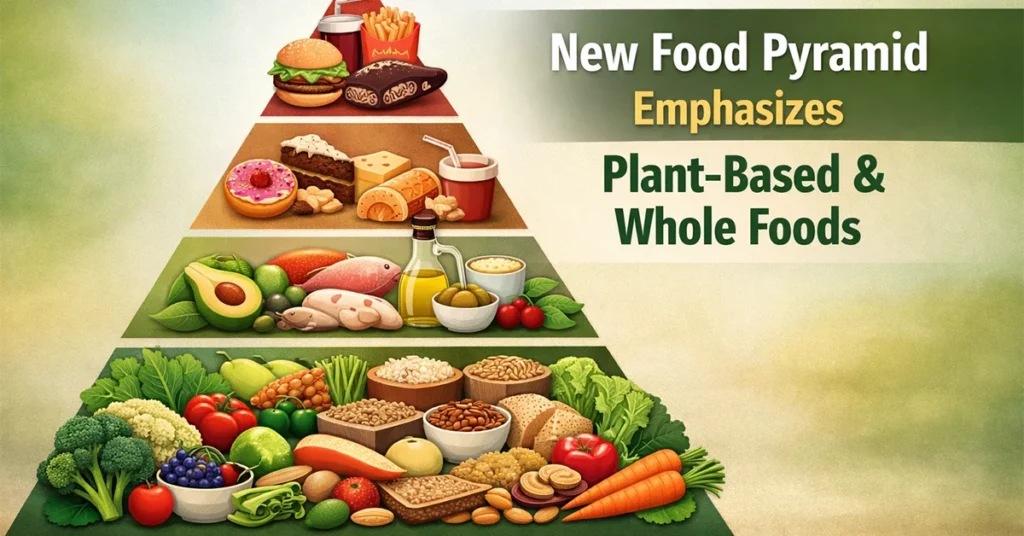
Health authorities and nutrition experts this week unveiled an updated food pyramid that redefines dietary guidance by prioritizing plant-based foods, whole grains, and sustainable eating patterns, according to officials. The revised model, released in updated dietary guidance, is designed to address rising rates of obesity, heart disease, and diabetes while aligning nutrition advice with environmental considerations.
The new pyramid places fruits, vegetables, legumes, and whole grains at its base, signaling that these foods should make up the largest share of daily intake. Nuts, seeds, and healthy fats such as olive oil appear above them, while fish, dairy, and lean meats are recommended in smaller amounts.
Refined grains, added sugars, and ultra-processed foods are positioned at the top of the pyramid, indicating they should be consumed sparingly. Nutrition officials said the visual framework is intended to be clearer and more actionable for the public than previous versions.
According to guidance cited by the World Health Organization, diets rich in plant-based foods are associated with lower risks of noncommunicable diseases and can reduce the environmental impact of food systems. The organization has increasingly emphasized nutrition as a key component of preventive healthcare.
Public health agencies said the updated pyramid reflects decades of research linking excessive intake of processed foods and red meat to chronic illness. The guidance also encourages limiting salt and added sugars and choosing minimally processed options whenever possible.
Several national health ministries are expected to adapt the new framework into country-specific dietary guidelines over the coming months. Officials said education campaigns and updated school nutrition standards may follow as governments incorporate the recommendations.
Experts noted that the pyramid is meant to serve as a flexible guide rather than a rigid diet plan, allowing for cultural preferences and local food availability. The overarching goal, they said, is to promote long-term healthy eating habits rather than short-term dietary trends.
ALSO READ: Milo Manheim Continues Expanding Acting Career Across Film, Television