Cape Canaveral, Florida, United States
News Desk | Science
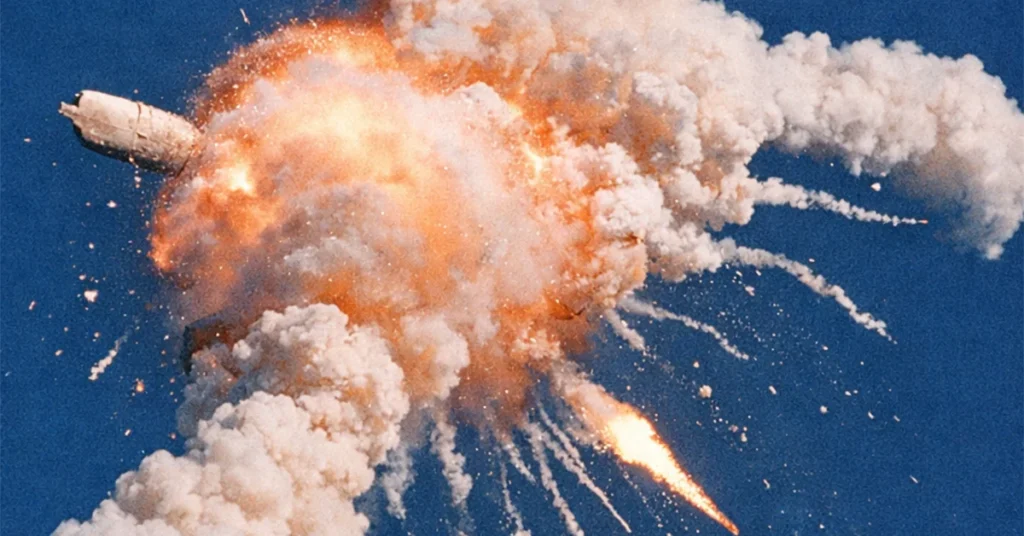
The Challenger explosion occurred on January 28, 1986, when the U.S. space shuttle Challenger disintegrated 73 seconds after liftoff from Cape Canaveral, Florida, killing all seven crew members aboard, according to NASA. The disaster unfolded during a live national broadcast and led to the immediate suspension of the U.S. space shuttle program.
The shuttle launched at 11:38 a.m. local time from Kennedy Space Center on mission STS-51-L. The crew included six astronauts and civilian teacher Christa McAuliffe, whose participation had drawn widespread public attention through NASA’s Teacher in Space program.
Video and telemetry data showed a plume of flame escaping from the right solid rocket booster, which ruptured the external fuel tank and caused the vehicle to break apart. NASA later confirmed that unusually cold temperatures contributed to the failure of rubber O-ring seals designed to prevent hot gases from escaping the booster joints.
In a televised address, President Ronald Reagan announced the loss of the crew and ordered flags lowered to half-staff nationwide. Reagan postponed the State of the Union address and described the astronauts as pioneers who “slipped the surly bonds of Earth to touch the face of God.”
A presidential commission, known as the Rogers Commission, later determined that the Challenger explosion was caused by both technical failures and flawed decision-making within NASA, including concerns raised by engineers that were not acted upon before launch.
The space shuttle fleet was grounded for nearly three years while NASA redesigned the solid rocket boosters and implemented major changes to its safety culture and launch approval process.
The Challenger explosion remains a defining moment in U.S. space history and continues to shape safety standards for human spaceflight.
ALSO READ: Spencer Pratt Comments On Reality TV Fame And Online Monetization